


Exa-DoST
Logiciels et outils orientés données pour l'Exascale
Partenaires et organisation
Consortium et lots de travail
Le consortium rassemble 11 équipes de recherche principales, 6 équipes de recherche associées et un partenaire industriel.
Elles couvrent les deux volets du domaine d’expertise requis par le projet.
D’une part, les équipes de recherche en informatique apportent leur expertise en matière de recherche liée aux données sur les infrastructures de supercalcul. D’autre part,les équipes de recherche en sciences computationnelles apportent leur expertise sur les défis rencontrés et relevés par les applications les plus avancées.
Ces équipes représentent 12 des principaux établissements français impliqués dans le domaine du traitement des données à l’exascale.
Core research teams
DataMoveCNRS, Grenoble-INP, Inria, Université Grenoble Alpes
DataMove is a joint research team between CNRS, Grenoble-INP, Inria and Université Grenoble Alpes and is part of the Computer Science Laboratory of Grenoble (LIG, CNRS/Université Grenoble Alpes). Created in 2016, DataMove is today composed of 9 permanent members and about 20 PhDs, postdocs and engineers. The team’s research activity is focused on High Performance Computing. Moving data on large supercomputers is becoming a major performance bottleneck, and the situation is just worsening from one supercomputer generation to the next. The DataMove team focuses on data-aware large scale computing, investigating approaches to reduce data movements on large scale HPC machines with two main research directions: data aware scheduling algorithms for job management systems, and large scale in situ data processing.
DPTACEA
DPTA CEA/DAM is recognized in the HPC community for the realization of massively parallel multi-physics simulation codes. The team from the Department of Theoretical and Applied Physics (DPTA) of the DIF, led by Laurent Colombet, developed in collaboration with Bruno Raffin (director of research at Inria and DataMove member) a high-performance in situ component to a simulation code called ExaStamp, which will serve as a starting point for contributions to the Exa-DoST project dedicated to in situ processing.
IRFMCEA
The Institute for Magnetic Fusion Research is the main magnetic fusion research laboratory in France. For more than 50 years, it has carried out research on thermonuclear magnetic fusion both experimental and theoretical. The IRFM team brings its HPC expertise to the project through the 5D gyrokinetic code GYSELA that it has been developing for 20 years through national and international collaborations with a strong interaction between physicists, mathematicians and computer scientists. With an annual consumption of 150 million hours, the team is already making intensive use of available national and European petascale resources. Because of the multi-scale physics at play and because of the duration of discharges, it is already known that ITER core-edge simulations will require exascale HPC capabilities. GYSELA will serve to build relevant illustrators for Exa-DoST, to demonstrate the benefits of Exa-DoST’s contributions (i.e., how the libraries enhanced, optimized and integrated within Exa-DoST will benefit GYSELA-based application scenarios).
JLLLCNRS, Observatoire de la Côte d’Azur, Université Côte d’Azur
JL Lagrange Laboratory leads the French contribution to the SKA1 global observatory project, contributes to the procurement of its two supercomputers (SDP) and the establishment of SKA Regional Data Centers (SRCs). JLLL is part of the Observatoire de la Côte d’Azur (OCA, CNRS/Université Côte d’Azur), an internationally recognized center for research in Earth Sciences and Astronomy. With some 450 staff, OCA is one of 25 french astronomical observatories responsible for the continuous and systematic collection of observational data on the Earth and the Universe. Its role is to explore, understand and transfer knowledge about Earth sciences and astronomy, whether in astrophysics, geosciences, or related sciences such as mechanics, signal processing, or optics. One of the core contributions of OCA to SKA is done through the SCOOP Agile SAFe team, working on hardware/software co-design for the two SKA supercomputers.
KerDataENS Rennes, Inria, INSA Rennes
KerData is a joint team of the Inria Center at Rennes University and of The french laboratory for research and innovation in digital science and technology (IRISA, CNRS/Université de Rennes 1). Its research is focusing on designing innovative architectures and systems for data I/O, storage and processing on extreme-scale systems: (pre-)Exascale high-performance supercomputers, cloud-based and edge-based infrastructures. In particular, it addresses the data-related requirements of new, complex applications which combine simulation, analytics and learning and require hybrid execution infrastructures (supercomputers, clouds, edge).
LESIACNRS, Observatoire de Paris, Sorbonne Université, Université Paris Cité
The Laboratoire d’Études Spatiales en Astrophysique is strongly engaged in low-frequency radio-astronomy with important responsibilities in the SKA and it precursor NeNuFar, together with a long history of using major radio-astronomy facilities such as LOFAR and MeerKAT. LESIA is part of Observatoire de Paris (OBS.PARIS, CNRS/Université de Paris-PSL), a national research center in astronomy and astrophysics that employs approximately 1000 people (750 on permanent positions) and is the largest astronomy center in France. Beyond their unique expertise in radio-astronomy, the teams from OBS.PARIS bring strong competences in giant instruments design and construction, including associated HPC / HPDA capabilities, dedicated to astronomical data processing and reduction.
LABCNRS, Université de Bordeaux
The Laboratoire d’astrophysique de Bordeaux has been carrying research & development activities for SKA since 2015 to produce detectors for the band 5 of the SKA-MID array. On-site prototype demonstration is scheduled in South Africa around mid-2024. This is currently the central and unique French contribution to the antenna/receptor hardware/firmware. In addition, LAB wishes to strengthen its contribution to SKA through relevant activities for SKA-SDP. Generally speaking, scientists and engineers at LAB have been working together on radio-astronomy science, softwares, and major instruments for several decades (ALMA, NOEMA, SKA…), producing cutting-edge scientific discoveries in astrochemistry, stellar and planetary formation, and the study of the Solar system giant planets.
MdlSCEA, CNRS, Université Paris-Saclay, Université de Versailles Saint-Quentin-en-Yvelines
The Maison de la Simulation is a joint laboratory between CEA, CNRS, Université Paris-Saclay and Université Versailles Saint-Quentin. It specializes in computer science for high-performance computing and numerical simulations in close connection with physical applications. The main research themes of MdlS are parallel software engineering, programming models, scientific visualization, artificial intelligence, and quantum computing.
MINDCEA, Inria
MIND is an Inria team doing research at the intersection between statistics, machine-learning, signal processing with the ambition to impact neuroscience and neuroimaging research. Additionally MIND is supported by CEA and affiliated with NeuroSpin, the largest neuroimaging facility in France dedicated to ultra-high magnetic fields. The MIND team is a spin-off from the Parietal team, located in Inria Saclay and in CEA Saclay.
SANLCEA
SANL is a team from the computer science department (DSSI) of CEA, led by Marc Pérache, CEA director of research, developing tools to enable simulation codes to manage inter-code and post-processing outputs on CEA supercomputers. This team is involved in IO for scientific computing code through the Hercule project. Hercule is an IO layer optimized to deal with a large amount of data at scale on large runs. Hercule manages data semantics to deal with weak code coupling through the filesystem (inter-code). We also studied in-situ analysis thanks to the research project PaDaWAn.
SISRCEA
The SISR team at CEA is in charge of every data management activity inside the massive HPC centers hosted and managed by CEA/DIF. Those activities are quite versatile: designing and acquiring new mass storage systems, installing them, and maintaining them in operational conditions. Beyond pure system administration tasks, the SISR team develops a large framework of open-source software, provided as open-source software and dedicated to data management and mass storage. Strongly involved in R&D efforts, the SISR is a major actor in the technical and scientific collaboration between CEA and ATOS, and is part of many EuroHPC funded projects (in particular the SISR drives the IO-SEA project).
TADaaMBordeaux INP, CNRS, Inria, Université de Bordeaux
TADaaM is a joint research team between the University of Bordeaux, Inria, CNRS, and Bordeaux INP, part of the Laboratoire Bordelais de Recherche en Informatique (LaBRI – CNRS/Bordeaux INP/Université de Bordeaux). Its goal is to manage data at system scale by working on the way data is accessed through the storage system, transfer via high-speed network or stored in (heterogeneous) memory. To achieve this, TADaaM envisions to design and build a stateful system-wide service layer for data management in HPC systems, which should conciliate applications’ needs and system characteristics, and combine information about both to optimize and coordinate the execution of all the running applications at system scale.
Associate research teams
Industrial partner
Points forts
Résultats et impact
GYSELA
Projet Gysela-X
Le code Fortran historique GYSELA (acronyme de « GYrokinetic SEmi-LAgrangian ») a été développé au CEA/IRFM depuis plus de 20 ans dans le cadre de collaborations nationales et internationales, grâce à une étroite interaction entre physiciens, mathématiciens et informaticiens. Il s’agit d’un code gyrocinétique global, entièrement non linéaire, de type « f », qui simule la turbulence et les transports dans le plasma au cœur des dispositifs Tokamak, y compris les effets électromagnétiques.
Le projet Gysela-X consiste à développer une série de codes gyrocinétiques dont l'objectif principal est de permettre des simulations à l'exascale de la turbulence et des transports dans le plasma d'un tokamak, y compris dans une géométrie de type « X-point ».
gyselax.github.ioPublication
MOSAIC : Classification automatique des modèles d'E/S
Théo Jolivel, Gabriel Antoniu, Philippe Deniel, François Tessier
Prépublication (HAL) · 2025
Consulter sur HALPublication
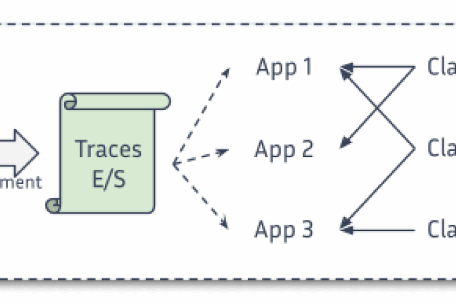
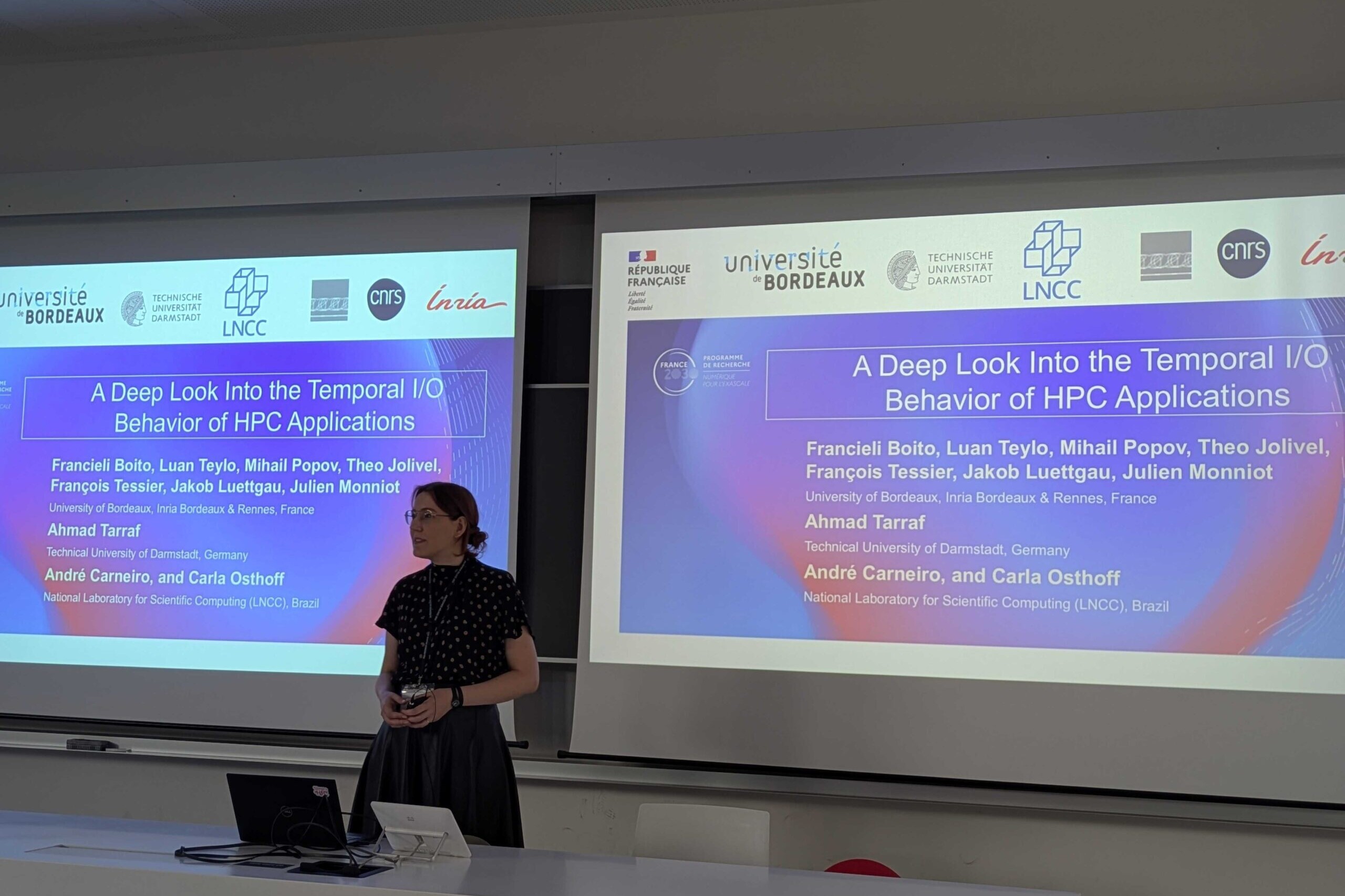
Une analyse approfondie du comportement temporel des E/S des applications HPC
Francieli Boito, Luan Teylo, Mihail Popov, Théo Jolivel, François Tessier, et al.
IPDPS 2025 — 39e Symposium international de l'IEEE sur le traitement parallèle et distribué · 2025
Consulter sur HALPoint fort du WP1 — Plus de 450 000 traces révèlent des schémas d'E/S prévisibles
, Blue Waters, SDumont, Intrepid et PlaFRIM.
Les optimisations ciblées doivent s'appuyer sur l'analyse du comportement de l'application.
Publication
Optimisation des points de contrôle en vue de la préparation des futures simulations de turbulence des plasmas à l'échelle exascale
Méline Trochon, Julien Bigot, Virginie Grandgirard, Dorian Midou
IPDPSW 2025 — 39e Symposium international de l'IEEE sur le traitement parallèle et distribué · 2025
Consulter sur HALPoint fort n° 2 du WP1 — L'agrégation intelligente des données rend la création de points de contrôle évolutive
WP2 – Permettre le traitement in situ et en transit à l'exascale
À l'échelle exascale, le stockage de toutes les données intermédiaires n'est pas viable : les opérations d'E/S peuvent avoir un impact prépondérant sur la durée d'exécution, le coût de stockage et les délais de post-traitement.
Mettre au point et interconnecter des modules logiciels permettant l'analyse in situ et en cours de transport pour des démonstrateurs Exa-DoST réels.
Les flux de travail GYSELA, Coddex et SKA.
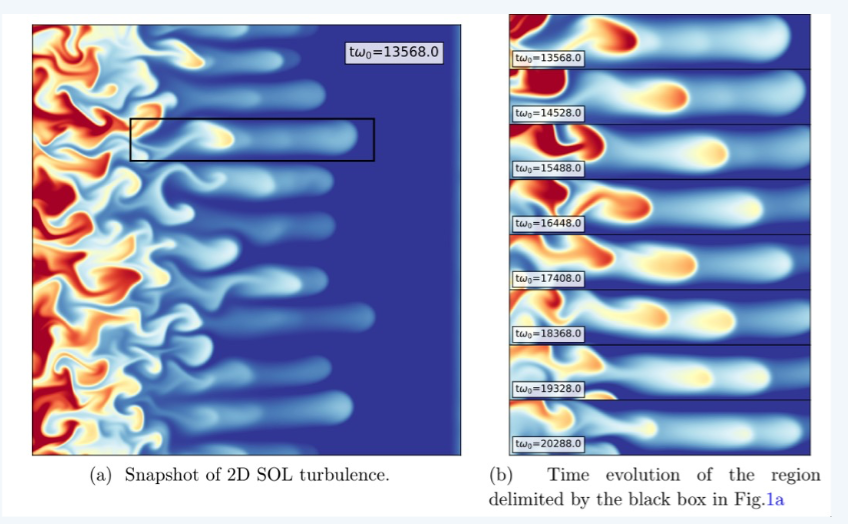
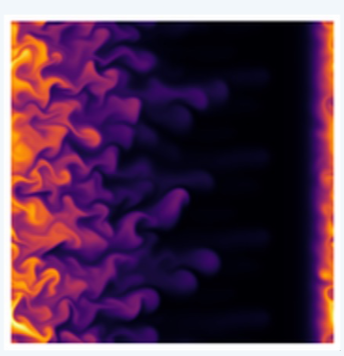
Fait marquant de 2025 : un défi lié à l'IA améliore la détection des turbulences
Les structures turbulentes sont à l'origine du transport de chaleur dans les tokamaks. Leur détection à grande échelle permet aux physiciens d'analyser le comportement du plasma sans avoir à procéder à une inspection manuelle.
Défi de partage de données portant sur la détection de la turbulence à partir de simulations physiques à grande échelle.
Ce défi a permis de transformer une tâche d'analyse scientifique en un critère de référence mesurable et de tester l'apprentissage par transfert dans différents contextes de simulation.
Fait marquant de 2025 : le projet SKA prêt pour une validation à grande échelle
SKA est un exemple phare du projet Exa-DoST : il nécessite la mise en place d'un pipeline réaliste avant que l'intégration logicielle puisse être évaluée.
Un processus de référence complet pour le SKA a été mis au point, depuis le simulateur jusqu'au produit final.
Cela permet de préparer la cible de validation ; il ne s'agit pas encore de l'intégration des modules logiciels Exa-DoST dans SKA.
Point fort de 2025 : GYSELA, moteur d'intégration entre les différents volets du projet
Étude des stratégies de création de points de contrôle avec PDI + IOPS afin de réduire le coût de ces points de contrôle.
fait de la simulation de la turbulence du plasma un test de référence concret pour les outils de traitement des données Exa-DoST.
IPDPSW 2025 ; temps de point de contrôle divisé par 4 ; nouvelle solution par défaut dans GYSELA.
Assistance PDI et corrections/optimisations rapides pour GYSELA ; dépôt d'E/S de la mini-application GYSELA préparé.
dissocie le code de simulation des opérations d'entrée-sortie et prépare l'intégration de flux de travail in situ.
Versions PDI ; canal d'assistance dédié à GYSELA ; dépôt gyselax/gysela-mini-app_io.
Deisa/PDI ouvrent la voie à l'analyse in situ axée sur les tâches pour les données de simulation.
ouvre un flux permettant d'analyser les données GYSELA pendant l'exécution des simulations, au lieu de tout enregistrer sur le disque.
API unifiée Deisa pour Dask/Ray ; tests à grande échelle ; cible de validation GYSELA.
Détection d'événements + détection de blobs avec Tokam2D ; mini-application GYSELA de compression physique.
prépare la détection automatisée des structures et la réduction des données pour les flux de travail relatifs à la turbulence du plasma, en complément de la voie « in situ » du WP2.
guide pour la détection de structures ; article sur les voies de transport dans la turbulence ; tests comparatifs IRN / auto-encodeur / ondelettes ; défi de données.
Main software
AGIOS
AGIOS is an I/O scheduling library developed by the TADaaM team, designed to operate at the file level. The library can be easily integrated into any I/O service that handles I/O requests, in order to enhance these services with scheduling capabilities. AGIOS has been successfully evaluated with file systems and implements many scheduling algorithms. Furthermore, the library is designed to facilitate the addition of new algorithms.
Actions expected in project
In the context of NumPEx, AGIOS will be utilized in the development of a testbed to evaluate and develop new I/O scheduling approaches. Our primary focus will be on I/O scheduling for parallel file systems and burst buffers.
Moreover, one of the main objectives is to make AGIOS an exascale-compliant library. Therefore, within the scope of NumPEx, considerable effort will be spent on the development of the library, with a focus on exascale systems and workloads.
Damaris
Damaris is a HPC software middleware used in MPI based simulation code and developed by the KERDATA team at Inria. Already demonstrated for scalable I/O and in-situ visualization, Damaris was experimented and validated beyond 14,000 cores on top supercomputers including Titan, Jaguar and Kraken for in situ/in transit data processing. After a bilateral project with TOTAL dedicated to the usage of Damaris for seismic codes, work in progress is now dedicated to the use of Damaris on pre-Exascale systems as part of two EuroHPC projects: ACROSS and EUPEX. Damaris will be one of the major software libraries that will be enriched and evaluated in Exa-DoST for use on the future French Exascale machine as part of the planned work in WP1 and WP2.
Actions expected in project
During the timeline of Exa-DoST, we plan to extend Damaris to support programmed and triggered based analyses. Programmed analyses are when one or more analysis schedules are set, with individual time schedules, to be performed using asynchronous processing via Damaris. A triggered analysis will be when an iterative (or programmed) analysis detects a process of interest which then launches a further more detailed analysis. The development of these methods has a current use-case within the physics domain, where a CEA code named Coddex will be used to facilitate the development of the integration, benchmark, and verify the capability. The use of GPU resources by Damaris processes is an area that will be further developed during the project.
The integration of Damaris asynchronous methods for use in other in situ frameworks, such as PDI, will be explored. This is envisioned by the development of a plugin for PDI, which will let PDI pass data through to Damaris. The use of new MPI capabilities such as MPI Sessions will be explored so as to see if the Damaris server processes can be accessed using the new MPI methods. This method of launching a job will be explored in its capacity to better co-locate Damaris resources within a heterogeneous node and its ability for the dynamic modification of the number of resources available through Damaris.
Use of other communications frameworks, such as the Mercury library, will be trialed, to see if they provide further flexibility of a simulation to use in situ methods and aid in transfer of data and methods to distributed computational resources.
Deisa
Deisa is a Dask-enabled in situ analytics framework. Developed at MdIS in collaboration with the DataMove team, it is a python tool based on Dask. It makes it possible to process data generated by parallel producers such as MPI simulations in Dask. Deisa offers a python interface to access the descriptor of the generated data ahead of time and build task graphs.
IOPS
The I/O Performance Evaluation Suite (IOPS) is a tool being developed by the TADaaM team to simplify the process of benchmark execution and results analysis in storage systems. It utilizes IOR, a microbenchmark for I/O, to conduct a series of experiments with various parameters. The goal of the tool is to automate the I/O performance evaluation process, as described in Boito et al. [1]. In this study, the authors explored the impact of several parameters on I/O performance, such as the number of nodes, processes, and file sizes, to find a configuration that achieves the system’s peak performance. Subsequently, these parameters were used to investigate the impact of the number of OSTs. IOPS is designed to execute the same analysis in an automatic and more efficient way, reducing the number of executions necessary to characterize the I/O performance of the entire HPC system.
Actions expected in project
IOPS will be developed alongside the NUMPEX project. Currently, the tool has a first version that performs a static characterization: it executes a brute force search by evaluating each parameter individually. The idea is to develop a smart tool that makes decisions on the evaluation of the next parameters based on the results of the previous ones. For this purpose, we plan to use Bayesian Optimization to reduce the number of experiments necessary. Moreover, we have two directions that will be explored in the context of NUMPEX. Firstly, the tool will be developed to be used in the characterization of parallel file systems of exascale systems (exascale-compliance); secondly, support for other benchmarks, not only for I/O, will be added. The idea is to be able to have a simple and automatic way of characterizing the performance of exascale platforms.
Joblib
Joblib is a library developed by the MIND team, aimed at providing simple tools to run embarrassingly parallel computation, passing seamlessly between single and multiple nodes runs. It is a set of tools to provide lightweight pipelining in Python. In particular:
- Transparent disk-caching of functions and lazy re-evaluation (memorize pattern).
- Simple interface for embarrassingly parallel computing.
Joblib is optimized to be fast and robust on large data in particular and has specific optimizations for NumPy arrays. It is BSD-licensed.
Actions expected in project
In the context of Exa-Dost, our goal is to make joblib an exascale-ready tool for handling simple parallel pipelines for a variety of applications. On-going actions related to NumPEx are along 4 main axis:
- Extending the available backends in joblib to allow more advanced workload repartition. Importantly, links with the StarPU team will allow us to develop fine-grain workflow management.
- Improve the support of resource management and constraints in joblib with task annotation.
- Provide novel backends for caching, in particular in the context of large distributed computing. These backends will be based either on centralized database systems or distributed file systems developed in the WP3.
- Provide an API for seamless checkpointing in Python. Checkpointing is a critical part when developing distributed applications, either for fault tolerance or saving different system states for result inspections (performance or analysis).
Melissa
Melissa is a software developed by DataMove for online processing of data produced from large scale ensemble runs (sensibility analysis, data assimilation, deep surrogate training).
Actions expected in project
On-going work related to NumPex are along 2 main axis:
- Data transfers: study the benefits of using ADIOS2 to transfer data from clients to servers (NxM data transfers) instead of the current implementation based on ZMQ. Benefits include:Performance gain as ADIOS2 is expected to better leverage high performance networks than ZMQExtended capabilities for NxM data transfers relying on ADIOS2 features.
- Simulation Based Inference: join work with Statify team to investigate if Melissa could be extended to support large scale Simulation Based inference (ensemble run + online learning using reversible diffusion neural networks).
Eventually in the context of Exa-DoST our goal is to make Melissa an exascale-ready tool for handling large scale ensemble runs for a variety of applications.
NFS-Ganesha
NFS-Ganesha is a NFSv3/NFSv4.x/9p.2000L server running in user space and was originally developed at CEA. Industrial partners including IBM, RedHat and Panasas joined the project. NFS-Ganesha is now very active in the project development and evolution. NFS-Ganesha is part of Fedora 21. NFS-Ganesha has a highly layered architecture. Top layers manage supported remote file system protocol. The lowest layers, File System Abstraction Layers (FSALs), provide dedicated support for various file systems. Each FSAL is delivered as a shared object, dynamically loaded as the server start. A single server can load and use several FSAL at the same time. NFS-Ganesha also has layers dedicated to aggressive metadata caching and state management (making states acquired via different protocols interoperable, a NLMv4 lock can block a NFSv4 or a 9p.2000L lock if the same object is accessed and locked). Within SAGE it has been used as a backend of NFS-Ganesha, to implement a high performance POSIX namespace over IO-SEA objects. In this scope, it is used as an ephemeral server in the IO-SEA software stack.
Actions expected in project
During the timeline of Exa-DoST, we plan to use NFS-Ganesha as a « Swiss Army knife » for building file systems. The software is quite versatile, and its architecture makes it possible to easily plug any storage system behind NFS-Ganesha. In particular, NFS-Ganesha now has full support for addressing objects store through a POSIX interface (via the NFS protocol).
PDI
The PDI data interface is a tool developed at MdlS that supports loose coupling of simulation codes with libraries. The simulation code is annotated in a library-agnostic way, and then HPC data libraries can be used from the specification tree without touching the simulation code. This approach works well for several concerns, including parameters reading, data initialization, post-processing, result storage to disk, visualization, fault tolerance, logging, inclusion as part of code-coupling, inclusion as part of an ensemble run, for which many PDI plugins have been developed. PDI is deployed in production in multiple European Large scale HPC simulation codes.
Actions expected in the project
During the timeline of Exa-DoST, we plan to:
- Expose device data directly to PDI. PDI will manage data transfer between the host and device with this functionality. This way, we can have a more flexible way of getting device data for in-situ analytics.
- Develop new plugins in PDI: one idea is to support Damaris as a PDI plugin to have dedicated processes for the data movement rather than using the same processes as the simulation.
- Optimize current plugins for more functionalities. For example, we will further develop the FTI plugin for checkpointing.
Phobos
Phobos is an open-source object store developed at CEA (DSSI) with a focus on long-term storage and tape management. It is designed as fully distributed and scalable, making it possible to spread services among numerous IO dedicated machines. Based on open protocol (such as S3/Swift) and open storage format (such as LTFS) to avoid vendor locking and ensure long term access to the stored information, its design allows the use of various databases, from relational DB engines (PostGreSQL) to NOSQL engines (MongoDB) and key-value stores (REDIS). Phobos architecture’s basements are « backend modules / plugins », available as shared libraries, making Phobos capable of adapting to multiple hardware solutions.
Actions expected in project
During the timeline of Exa-DoST, we plan to provide an open-source solution to object store based storage. Object store is an important path to be followed for it offers the required scalability and capacity for managing the « huge storage » for exascale system (parallel filesystems such as Lustre may have issues to scale up to the Exascale requirements).
RobinHood
RobinHood Policy Engine is a versatile tool developed at CEA (SISR) to manage contents of large file systems. It maintains a replica of filesystem metadata in a database that can be queried at will. It makes it possible to schedule mass action on filesystem entries by defining attribute-based policies, provides fast ‘find’ and ‘du’ enhanced clones, and gives to administrators an overall view of filesystem contents through its web UI and command line tools. Originally developed for HPC, it has been designed to perform all its tasks in parallel, so it is particularly adapted for running on large filesystems with millions of entries and petabytes of data. But of course, it is possible to take advantage of all its features for managing smaller filesystems, like ‘/tmp’ of workstations. IO-SEA will leverage RobinHood by using it as a building brick for developing the Vertical Data Placement Engine, taking advantage of the experience gained by developing RobinHood as well as existing mechanisms and algorithms.
Actions expected in project
During the time-line of Exa-DoST, we plan to provide a versatile utility when it becomes necessary to trigger automated actions on files and directories within a filesystem as they meet some identified characteristics. The most recent developments in RobinHood made it possible to operate on objects stored in object stores as well as filesystems.
Scikit-learn
scikit-learn is a reference library for machine learning in Python, developed at Inria. It provides a simple and robust API to all the traditional ML stack, and in particular:
- Simple and efficient tools for predictive data analysis
- Accessible to everybody, and reusable in various contexts
- Built on NumPy, SciPy, and matplotlib
- Open source, commercially usable – BSD license
Actions expected in project
During the timeline of Exa-DoST, we plan to improve the scikit-learn support for very large datasets and distributed runs, as well as its interfacing with exascale workflow. In particular, our actions will aim at:
- Improving the support of the array API with distributed data formats such as dask arrays, which support lazy operations that can be efficiently distributed.
- Improving the support of the partial_fit API, which would allow us to integrate scikit-learn in distributed workflows to analyze the output of large simulations or ensembles of simulations.
Fives
Fives is a simulator of high-performance storage systems based on WRENCH and SimGrid, two state-of-the-art simulation frameworks. In particular, Fives can handle the model of a parallel file system such as Lustre and a computing partition, and simulate a set of jobs performing I/O on the resulting HPC system with a high accuracy. Within Fives, a job model is designed to represent a history of jobs and submit them to a job scheduler (conservative backfilling strategy available in WRENCH). A model of an existing supercomputer, Theta at Argonne National Laboratory, and a reimplemented version of its Lustre file system have been developed in this simulator. On a class of jobs, Fives is able to reproduce the I/O behavior of that system with a good level of accuracy compared to real-world data.
Actions expected in project
During the timeline of Exa-DoST, we plan to extend Fives capabilities in several ways. Firstly, at the job model level, Fives is limited to very basic information on the I/O behavior of applications (total volume read or written, total I/O time). An evolution within Exo-DoST will be to augment this model so as to be able to describe I/O patterns more precisely. Consequently, Fives will be enhanced to take this new information into account, so as to improve the accuracy of our simulator. On the infrastructure model side, we also plan to implement new emerging storage systems such as DAOS, with the aim of having sufficient abstractions to simulate a wide variety of high-performance storage systems.
En bref
Indicateurs de projet
Données au 31 décembre 2025.
Réservez la date
Événements Exa-DoST
Découvrez les prochains événements Exa-DoST : nos séminaires et conférences, ainsi que les événements de nos partenaires.

Organisé par Numpex
Exa-DoST

Assemblée générale Exa-DoST Organisé par Numpex
Assemblée générale Exa-DoST

Organisé par Numpex
NumPEx Exa-AToW Exa-DI Exa-DoST Exa-MA Exa-SofT

Assemblée générale NumPEx Exa-AToW Exa-DI Exa-DoST Exa-MA Exa-SofT Organisé par Numpex
Assemblée générale de NumPEx
Aucun événement à venir pour le moment — consultez les événements passés.
Événements passés
Exa-AToW Exa-DI Exa-DoST Exa-MA Exa-SofT NumPEx
Conférence Exa-AToW Exa-DI Exa-DoST Exa-MA Exa-SofT NumPEx
FORUM TERATEC
Organisé par Numpex
Exa-DI Exa-DoST
Formation / Tutoriel
Tutoriel sur le PDI pour une gestion flexible des flux de données d’entrée-sortie dans les simulations HPC
Formation / Tutoriel Exa-DI Exa-DoST Organisé par Numpex
Tutoriel sur le PDI pour une gestion flexible des flux de données d’entrée-sortie dans les simulations HPC
En collaboration avec la Maison de la Simulation/CEA et Exa-DoST/NumPEx.
Organisé par Numpex
Exa-SofT Exa-MA NumPEx Exa-AToW Exa-DI Exa-DoST
Atelier
Atelier inter-PEPR « Quand l’IA et le calcul haute performance (HPC) rencontrent la science des matériaux »
08h30–17h30
Atelier Exa-SofT Exa-MA NumPEx Exa-AToW Exa-DI Exa-DoST Organisé par Numpex
Atelier inter-PEPR « Quand l’IA et le calcul haute performance (HPC) rencontrent la science des matériaux »
La journée « Inter-PEPR », organisée conjointement par les PEPR DIADEM, PEPR AI et PEPR NumPEx, se tiendra le 18 novembre 2024 au Centre de l’Intelligence Artificielle de la Sorbonne (SCAI), Espace Forum, situé au 4, place Jussieu, 75005 Paris. Cet événement a pour objectif de mettre en avant des travaux de recherche p…
Organisé par Numpex
Exa-DoST
Assemblée générale Exa-DoST Organisé par Numpex
Réunion annuelle d’Exa-DoSt
Organisé par Numpex
Exa-DI Exa-DoST
Formation / Tutoriel
Formation sur les E/S parallèles et l’analyse in situ : traitement haute performance des données à l’échelle exascale
Formation / Tutoriel Exa-DI Exa-DoST Organisé par Numpex
Formation sur les E/S parallèles et l’analyse in situ : traitement haute performance des données à l’échelle exascale
En collaboration avec la Maison de la Simulation/CEA et Exa-DoST/NumPEx.

Organisé par Numpex
NumPEx Exa-AToW Exa-DI Exa-DoST Exa-MA Exa-SofT

Conférence NumPEx Exa-AToW Exa-DI Exa-DoST Exa-MA Exa-SofT Organisé par Numpex
Forum Teratec 2024
Le Forum TERATEC est un événement majeur en Europe qui rassemble les meilleurs experts internationaux en calcul haute performance (HPC), en simulation numérique, en traitement de données à grande échelle, en intelligence artificielle et en informatique quantique. Et les membres de NumPEx sont ravis de faire partie de c…
Organisé par Numpex
Exa-DoST
Exa-DoST Organisé par Numpex
Kick-Off PC3 – Exa-DoST
Organisé par Numpex
Exa-AToW Exa-DI Exa-DoST Exa-MA Exa-SofT
Assemblée générale Exa-AToW Exa-DI Exa-DoST Exa-MA Exa-SofT Organisé par Numpex
Lancement de NumPEx
Aucun événement passé ne correspond à ces filtres.
Nouvelles
Exa-DoST dernières nouvelles

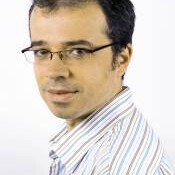
Gabriel Antoniu
Co-responsable d'Exa-DoST
Directeur de recherche à l'Inria
Centre Inria de l'université de Rennes — IRISA (UMR 6074), équipe du projet KerData, Rennes

Julien Bigot
Co-responsable d'Exa-DoST
Chercheur au CEA au sein de la MdlS · Membre de l'Exa-DI
CEA — Maison de la Simulation (UAR 3441), CEA Saclay, Gif-sur-Yvette

Francieli Zanon Boito
Co-responsable du WP1
, maître de conférences à l'Université de Bordeaux, au seindu LaBRI (UMR 5800) — Équipe du projet TADaaM de l'Inria, à Talence

François Tessier
Co-responsable du WP1
Chercheur à l'Inria
Centre Inria de l'université de Rennes — IRISA (UMR 6074), équipe du projet KerData, Rennes

Yushan Wang
Co-responsable du WP2
, chercheurau CEA — CEA — Maison de la Simulation (UAR 3441), CEA Saclay, Gif-sur-Yvette
Maxime Stauffert
Co-responsable du WP2
, ingénieure de recherche au CEA,CEA/DAM/DIF — LiHPC, équipe de visualisation (Themys), Bruyères-le-Châtel

Thomas Moreau
Co-responsable du WP3
Chercheur scientifique à Inria
Centre Inria de l'Université Paris-Saclay — Equipe-projet MIND, NeuroSpin, Gif-sur-Yvette

Bruno Raffin
Co-responsable du WP3
Chercheur à l'Inria — Responsable de l'équipe DataMove
Centre Inria de l'Université Grenoble Alpes — LIG (UMR 5217), Grenoble

Damien Gratadour
Co-responsable du WP4
Maître de conférences à l'Observatoire de Paris
Directeur du laboratoire commun ECLAT · Contribution à la stratégie française de R&D pour le SKA
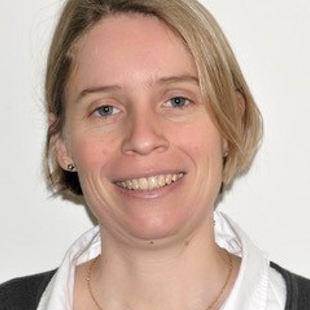
Virginie Grandgirard
Co-responsable du WP4
, chercheur àla CEA — IRFM, Cadarache, Saint-Paul-lez-Durance