


Webinar

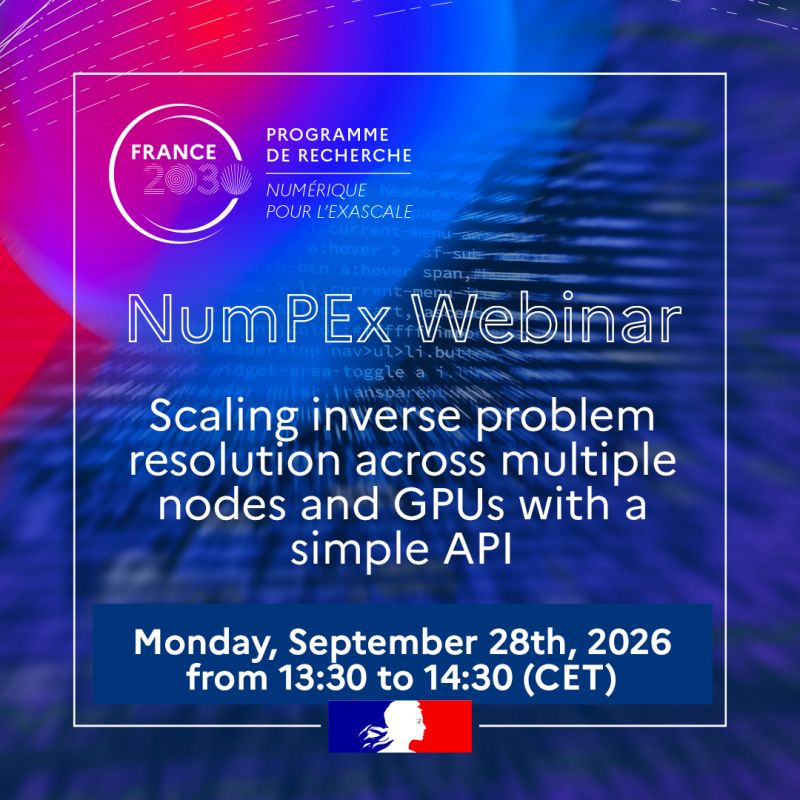
1st Webinar : Scaling inverse problem resolution across multiple nodes and GPUs with a simple API
🚀 Save the Date: New Monthly Webinar Series!
We’re launching a monthly webinar series, so come join us every last Monday of the month, from 1:30 PM to 2:30 PM (CEST)! The first session "Scaling inverse problem resolution across multiple nodes and GPUs with a simple API" will be presented by Benoît Malézieux in September.
🔶 Scaling inverse problem resolution across multiple nodes and GPUs with a simple API
📅 September 28, 2026 from 1:30 PM to 2:30 PM (CEST)
💻 Online (Zoom): https://us02web.zoom.us/j/82780507411?pwd=elcVkHIft8Oxjzk2XIr9HkcPyj5NmC.1#success
(You should click on this link from the post on Linkedin to ensure you to join correctly the Zoom Video)
✅ Free access — no registration required
Want to know more? Scientific imaging pipelines are increasingly powered by neural networks, but training these models on large-scale images and volumes remains a challenge due to computational and engineering constraints. This session will introduce a distributed framework, integrated into the open-source library DeepInv, enabling seamless training and inference across multiple GPUs and nodes through a user-friendly API. We’ll demonstrate its effectiveness on large-scale inverse problems, where individual data samples contain hundreds of millions of pixels or voxels.
A unique opportunity to explore cutting-edge solutions for scalable scientific computing!
Webinar Recap – Packaging HPC Software
E. Agullo (INRIA) led a webinar on modern packaging strategies using Spack and Guix-HPC, and J. Cladellas (UNISTRA) provided a preview of feelpp.benchmarking, a new tool for benchmarking HPC software on EuroHPC systems, see for example bench.feelpp.org website generated using the tool for the toolboxes of Feel++.

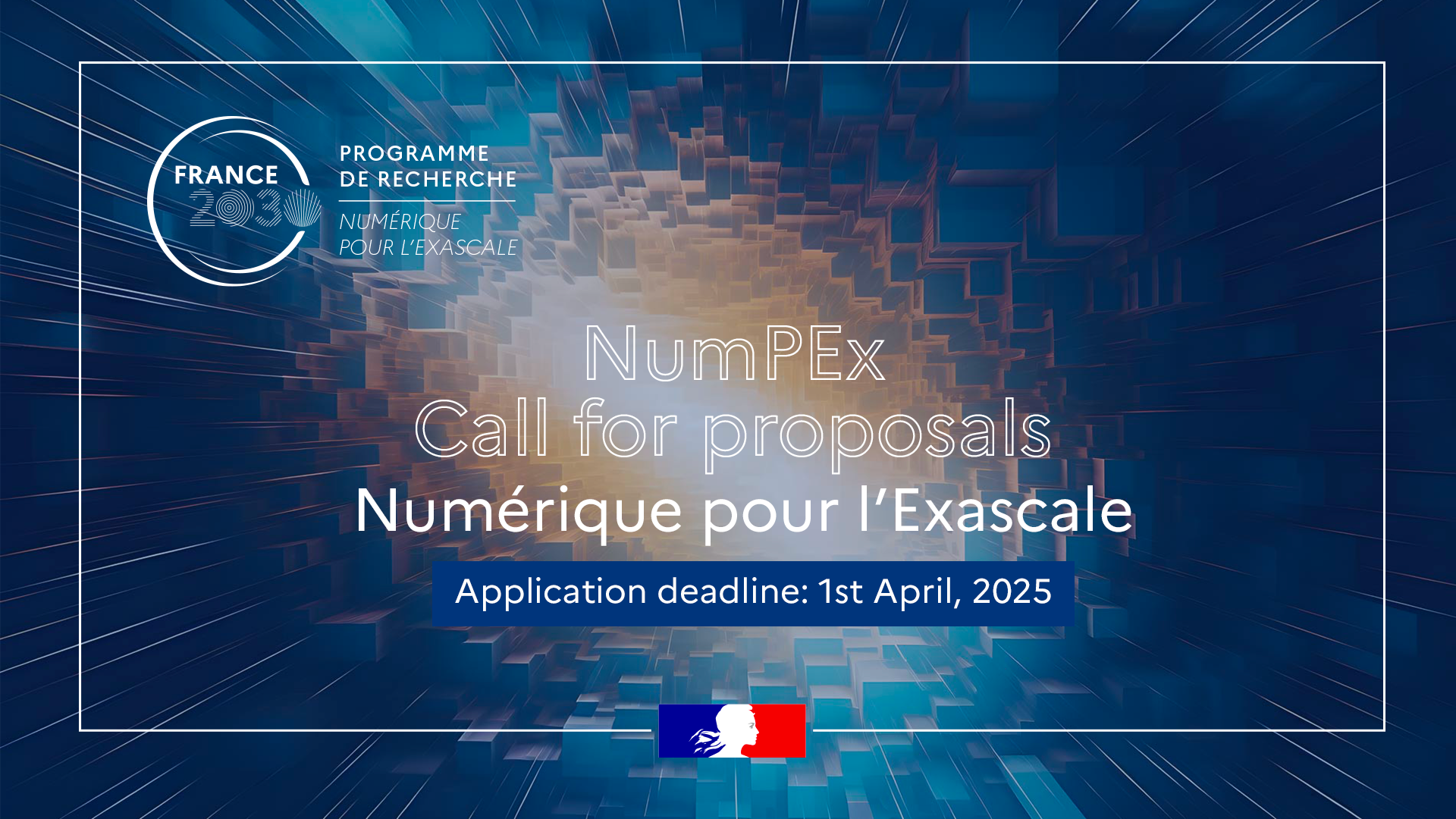
Webinar - AAP "Numérique pour l'Exascale"
NumPEx is launching its first call for projects to support advances in high-performance computing, high-performance data analysis and artificial intelligence. Our France 2030 research program aims to develop software capable of operating future exascale machines, and to prepare the main scientific and industrial application codes.
Interested in this AAP? This webinar is for you.