



Saint-Girons V: NumPEx highlights the future of numerical computing at the HPC frontier
From 29 June to 3 July 2026, the Saint-Girons V conference brought together researchers from across the HPC and numerical computing communities to discuss the algorithms, architectures and emerging technologies shaping the future of scientific computing.
The fifth edition of the Saint-Girons Conference took place in Saint-Girons, in the Ariège region of France, from 29 June to 3 July 2026. Building on a conference series that dates back to 1994, Saint-Girons V brought together researchers working at the intersection of high-performance computing, numerical mathematics, scientific applications and computer architectures.
This year’s programme reflected the rapidly evolving HPC landscape. Discussions covered numerical linear and multilinear algebra, numerical optimisation, PDE solvers, AI for scientific computing, HPC for AI, quantum computing, mixed and low-precision computing, randomized algorithms and low-rank approximation. The conference highlighted how advances in algorithms and numerical methods must go hand in hand with developments in hardware and computing architectures.
NumPEx at Saint-Girons V
As part of the programme, Alfredo Buttari (CNRS–IRIT) presented “The NumPEx French PEPR Research Program”, introducing the programme, its objectives and its contribution to the development of the French Exascale software ecosystem. His presentation took place during the conference’s HPC and numerical linear algebra sessions, alongside contributions from leading researchers from academia, research organisations and industry.
The conference provided a particularly relevant setting to present NumPEx. Its focus on the interaction between algorithms, applications and computing architectures closely mirrors one of the central challenges of the transition towards Exascale: developing software and numerical methods capable of fully exploiting increasingly
Looking towards the next generation of HPC
Saint-Girons V also provided a broader perspective on the transformations underway in scientific computing. The rise of AI and massive data processing, the emergence of quantum computing and the move towards new precision regimes are opening new research directions while raising fundamental questions about performance, portability, energy efficiency and numerical reliability.
For NumPEx, these discussions contribute to the wider effort to anticipate the software challenges of the Exascale era, foster connections between the different communities involved in scientific computing and support the development of innovative numerical methods and software.
Beyond the scientific programme, the conference’s informal format encouraged exchanges between researchers and helped create new opportunities for collaboration — a long-standing feature of the Saint-Girons meetings.

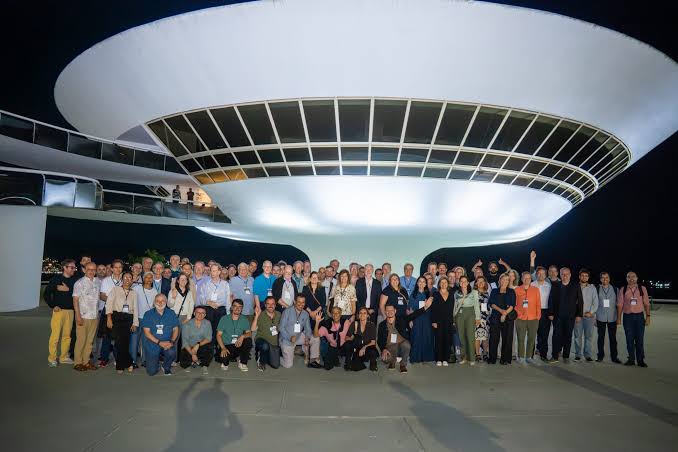
InPEx 2026: Shaping the Post-Exascale Future Through International Collaboration
From 22 to 25 April 2026, the InPEx community gathered in Niterói, Brazil, bringing together around 120 HPC experts from Europe, Japan, the United States and Latin America to explore the challenges and opportunities of the Post-Exascale era.
The International Post-Exascale Project (InPEx) held its 2026 workshop from 22 to 25 April in Niterói, near Rio de Janeiro, Brazil. The workshop brought together around 120 experts from the international HPC community, representing research organisations, universities and national computing initiatives from Europe, Japan, the United States, Latin America and the Caribbean.
Launched in 2023 as an international initiative, InPEx was initiated by the French PEPR NumPEx to foster international collaboration and co-design around the future of high-performance computing. The initiative brings together major HPC communities and programmes, including NumPEx in France, EuroHPC in Europe, the US Exascale Computing Project ecosystem and Japan’s national supercomputing initiatives.
Exploring the key challenges beyond Exascale
The 2026 workshop focused on the major technological and scientific challenges emerging as HPC moves towards and beyond the Exascale era.
Five major topics structured the discussions: HPC/AI convergence, GenAI and software engineering, the computing continuum and data management, experimentation with large AI models for science, and international roadmapping. Quantum computing was also addressed as part of the broader convergence between emerging computing paradigms.
The workshop provided a unique opportunity to compare regional strategies and ongoing initiatives. Representatives from Japan, the United States, Europe and Latin America presented their national and regional roadmaps, including developments around AI for Science, quantum computing, AI Factories and future HPC infrastructures.
Dedicated working sessions then brought participants together to address concrete research and technology challenges. Discussions explored topics such as AI and HPC co-design, scalable training and inference, heterogeneous architectures, low-precision computing, AI-driven software engineering, scientific foundation models and the integration of computing resources across the computing continuum.
From shared challenges to international roadmaps
A central objective of InPEx is to move beyond the exchange of information and build shared visions and concrete international collaborations. The Niterói workshop continued work initiated during previous InPEx meetings and contributed to the development of common roadmaps for the Post-Exascale era.
The international roadmapping discussions addressed the future of heterogeneous computing, energy efficiency and the convergence of AI, HPC and quantum computing. The workshop also explored how international communities could coordinate their efforts to address common technological challenges and support future research and funding strategies.
NumPEx at the heart of the international Post-Exascale dialogue
For NumPEx, InPEx represents a major international extension of its mission to anticipate the software and technological challenges of Exascale and beyond.
By initiating and supporting InPEx, NumPEx is helping to create a global forum where HPC communities can share experience, identify common challenges and co-design the technologies needed for the next generation of scientific computing. The initiative also strengthens links between European, American, Japanese and Latin American HPC ecosystems.
The 2026 workshop in Brazil marked another important step in this process, transforming discussions around Post-Exascale computing into concrete international working groups, roadmaps and collaborative activities.